
I help travel brands and tourism organizations understand how people choose, evaluate, and experience travel.
My background includes 4 years of management consulting at McKinsey and a PhD from Harvard. I apply the same structured, analytical approach to understanding traveler behavior and translating it into clear, practical insight.
My work focuses on one question:
What actually drives decisions and behavior, and what does that mean for your business?
What I Do
I provide structured insight into traveler behavior, combining data, analysis, and real-world context.
This is relevant when you are trying to understand:
- Why certain segments are not converting
- How your destination or product is perceived by specific audiences
- What factors influence how people choose where to travel
- Whether your positioning aligns with how people actually make decisions
The goal is to move from fragmented information to clear, usable direction.
Services
1. Insight Sprint
A short, focused analysis designed to answer a specific question about your audience or positioning.
Typical use cases:
- Understanding gaps between perception and reality
- Evaluating how a specific segment views your destination or product
- Identifying key decision drivers for a target audience
What you receive:
- A concise report with key findings
- Clear implications for your business
- Optional follow-up discussion
2. Advisory Session
A 60–90 minute working session focused on a specific question, challenge, or initiative.
This is useful if you:
- Are developing a campaign or refining positioning
- Want an external perspective grounded in data and behavior
- Need to pressure-test assumptions or interpret existing insights
The session is structured and focused on helping you reach clearer decisions, not general discussion.
3. Custom Insight and Research
Deeper analysis tailored to your organization and specific context.
This can include:
- Combining multiple data sources into a clear narrative
- Interpreting existing research or internal data
- Segment-specific analysis (for example, solo travelers or remote workers)
The emphasis is on translating information into clear implications for strategy and communication.
Example Work
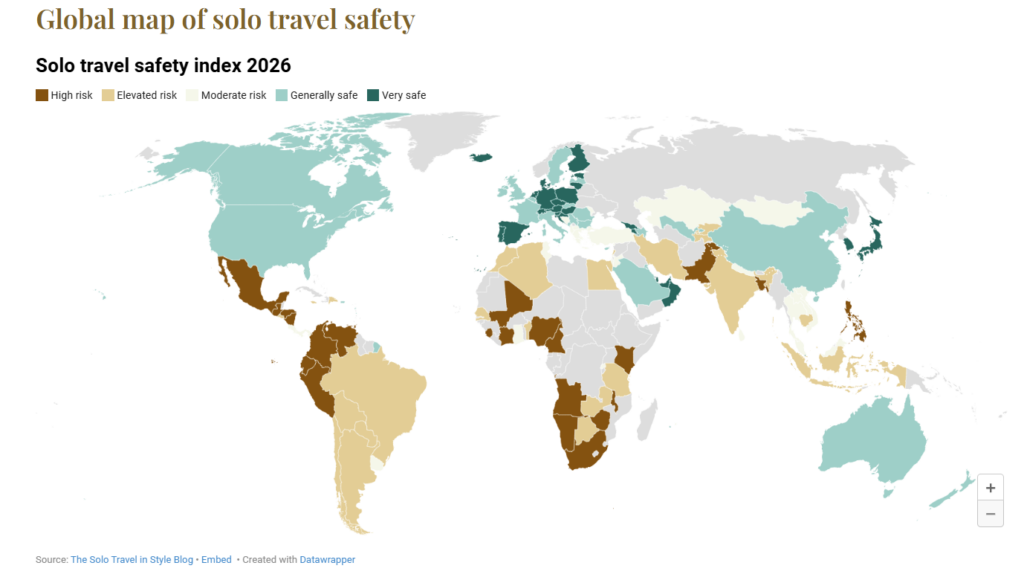
Solo Travel Safety: Perception vs Reality
I developed an independent analysis to better understand how safety influences destination choice, particularly for solo travelers.
The project combined multiple public data sources into a single comparative index, allowing for a structured view of how destinations rank in terms of objective safety indicators.
The focus was not ranking countries, but identifying the gap between measured safety and perceived safety, and how that gap affects traveler decisions.
Key Insights
- Destinations that score highly on objective safety metrics are not always perceived as safe by solo travelers
- Perception is often shaped by narrative, visibility, and familiarity rather than data
- This creates a disconnect where safer destinations may be overlooked, while others benefit from stronger perceived trust
Why This Matters
For tourism boards and travel brands, safety is not only an operational issue. It is a positioning issue.
If perception does not align with reality:
- Demand may not reflect actual conditions
- Marketing messages may fail to address real concerns
- Opportunities to attract specific segments, such as solo travelers, may be missed
How This Work Can Be Applied
This type of analysis can be adapted to:
- Specific destinations or regions
- Target segments such as solo female travelers or remote workers
- Questions related to positioning, messaging, and perceived risk
The goal is always the same:
To translate fragmented data into clear insight that can inform strategy and communication.
Who I Work With
- Tourism boards
- Travel and hospitality brands
- Travel startups
Get in Touch
If you are working on a question related to traveler behavior, positioning, or decision-making, you can get in touch here.