
Last Updated on June 16, 2026 by Ioana
Vienna has been part of my life for as long as I can remember.
My aunt lived there when I was growing up, so I spent several school vacations exploring the Austrian capital. Later, one of my close friends moved there for university and eventually stayed to work, which gave me even more reasons to keep returning as an adult.
Because of that, Vienna feels different to me than many other European cities I’ve visited. It’s not just a destination I’ve checked off a list. It’s a city I’ve experienced at different stages of my life.
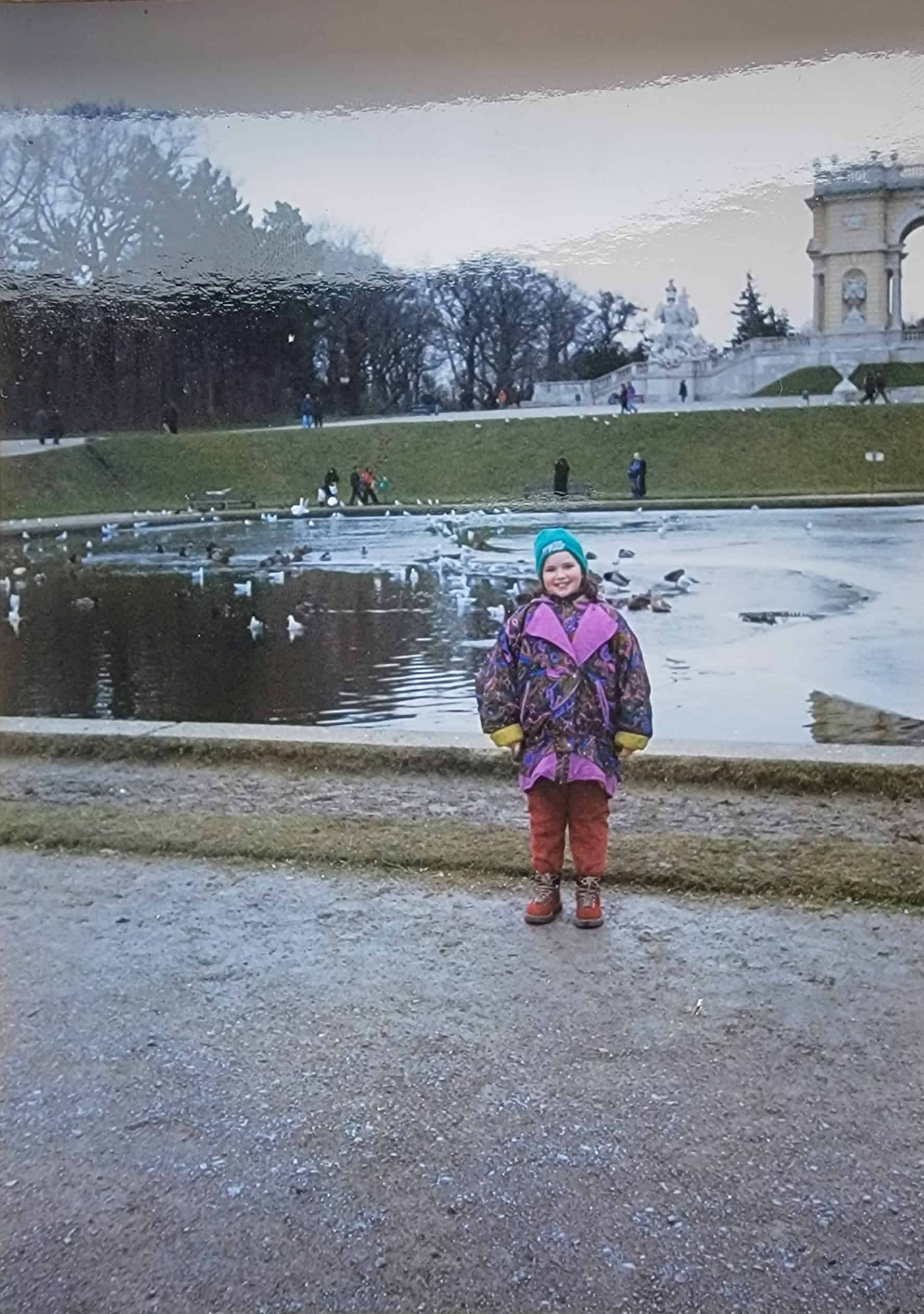
When I was a kid, I was completely obsessed with Empress Elisabeth, better known as Sissi. Every trip to Vienna included a visit to Schönbrunn Palace. I still have a photo of myself as a child standing in the palace gardens.
As an adult, what keeps drawing me back is something completely different: Vienna’s café culture. Few cities in Europe do coffee and cake quite like Vienna.
This Vienna 2 day itinerary combines Vienna’s imperial history, beautiful architecture, famous cafés, and local experiences without rushing from attraction to attraction. This post contains affiliate links. When you make a purchase I may get a small commission at no extra cost to you. Find out more here.
✈️ Planning your Vienna trip?
If you want to keep things simple, these are the best things to book in advance:
- 🎵 Vivaldi’s Four Seasons Concert in Karlskirche
- 🏰 Schönbrunn Palace tickets
- 🚗 Hallstatt and Salzburg day trip
- 🏨 Best accommodations for all budgets
👉 If you’re visiting in summer, I highly recommend booking hotels and tickets in advance because things sell out quickly.
Day 1: Imperial Vienna, Coffee Houses, and the Historic Center
Start your morning at Schönbrunn Palace
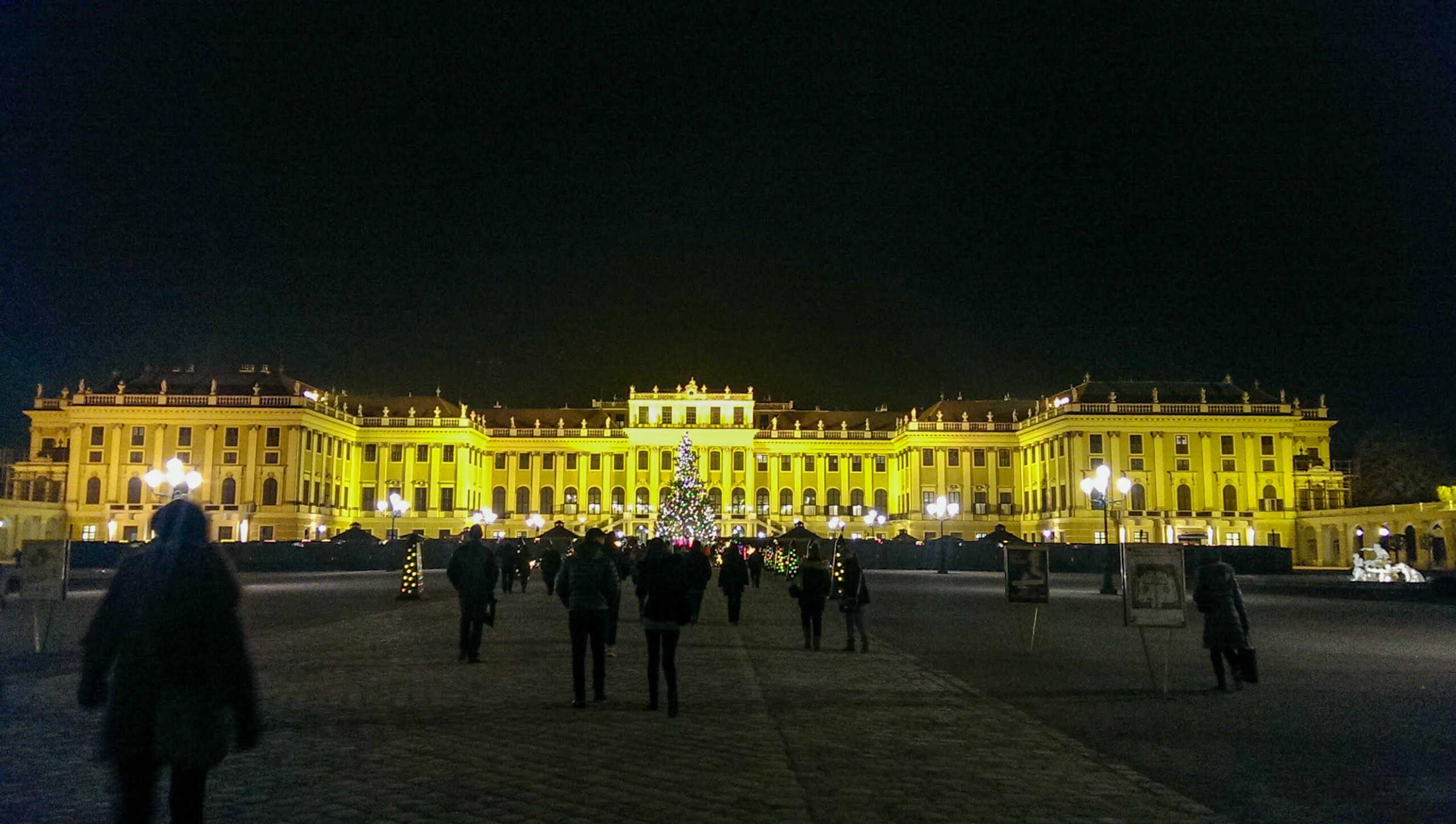
If you’re visiting Vienna for the first time, I would make Schonbrunn Palace your very first stop. It’s such a beautiful place!
I may be biased because this place was a huge part of my childhood trips to Vienna. I went through a phase where I was completely obsessed with Empress Elisabeth, better known as Sissi. Like I watched every movie, read books about her, and couldn’t wait to visit the palace whenever we came to Vienna.
Seeing her dresses, personal belongings, and famous diamond star hair accessories in person felt magical.
Even if you’re not a history buff, Schönbrunn is one of those places that helps you understand how powerful the Habsburg Empire once was. The palace contains more than 1,400 rooms, although visitors only see a portion of them on guided tours.
The rooms are beautifully preserved and give you a glimpse into the daily lives of emperors, empresses, and royal children.
My advice is to arrive early in the morning. Schönbrunn is one of Vienna’s most visited attractions and tour groups start arriving quickly.
After touring the palace, don’t rush off immediately. The gardens are just as impressive as the interiors.
Wander through the Schönbrunn Gardens and Gloriette
The gardens behind Schönbrunn are enormous and completely free to visit.
Even if you don’t buy a palace ticket, I still think the grounds are worth your time.
Walk through the formal gardens, admire the fountains, and make your way up to the Gloriette, the elegant structure sitting on top of the hill overlooking the palace.
The walk isn’t difficult, and the reward is one of the most beautiful views in Vienna.
Looking down over the palace and across the city, it’s easy to understand why this was chosen as the Habsburg summer residence.
Head to historical center and grab coffee and cake at a traditional Viennese café
After Schonbrunn, take the metro or an Uber and head to the historical center. The trip should take you around 30 minutes.
You can’t visit Vienna without experiencing its coffeehouse culture. Vienna’s coffeehouse culture is recognized by UNESCO and is just as much a part of the city’s identity as its palaces and museums.
In fact, if you only remember one thing from this itinerary besides Schönbrunn, I hope it’s the coffee and cake.
Vienna’s cafés aren’t just places to grab a quick drink. They’re institutions. People come here to read newspapers, meet friends, work, and spend hours lingering over a coffee.
Whenever I return to Vienna, one of the first things I do is order a Wiener Melange. It’s similar to a cappuccino but distinctly Viennese and feels like the perfect introduction to the city’s café culture.
Of course, you’ll also need cake.
Sacher torte is the most famous option. This chocolate cake layered with apricot jam was invented in Vienna at Café Sacher (you can go there!) and has become one of Austria’s most iconic desserts.
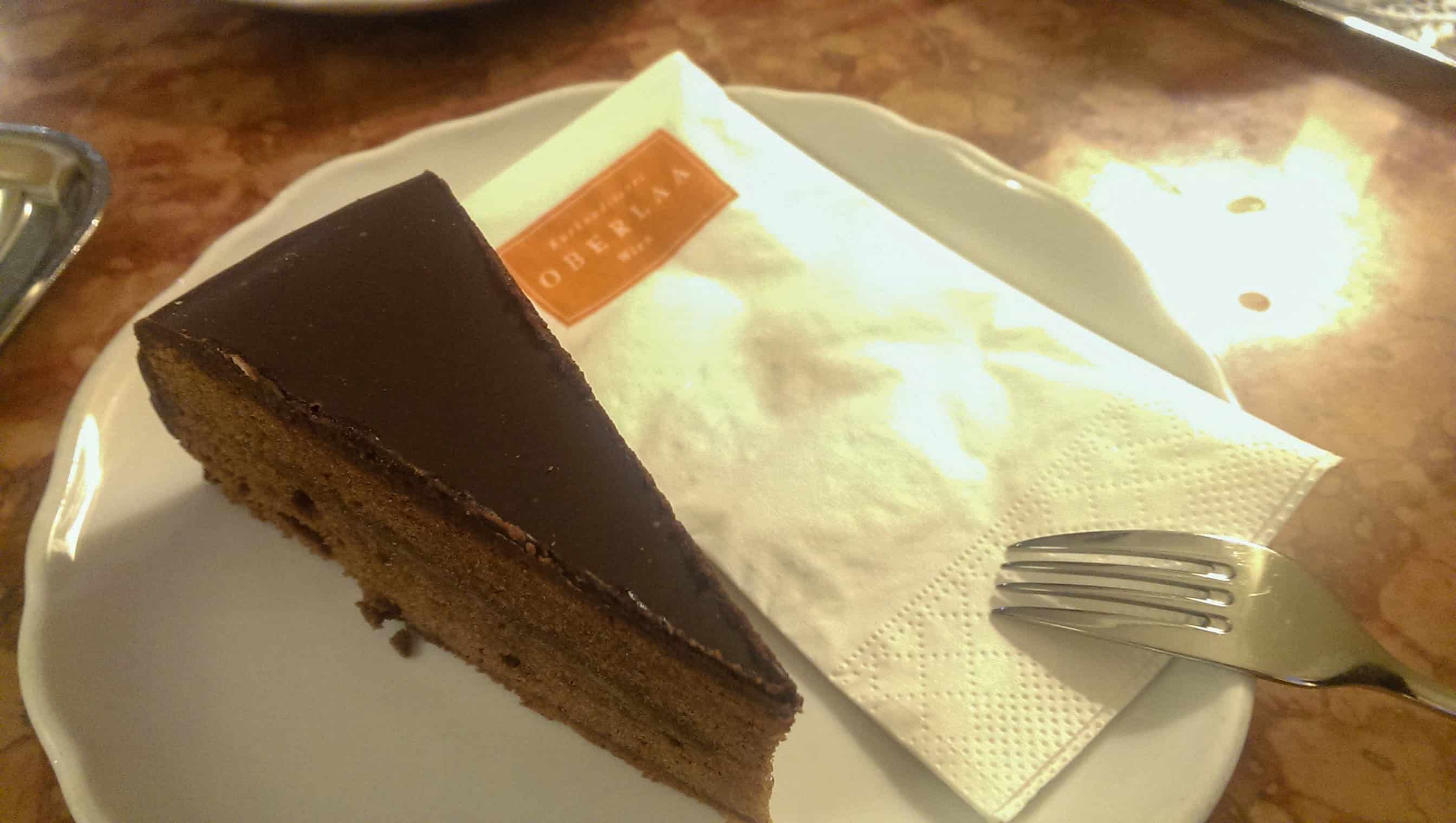
If you’re curious about the original version, head to Hotel Sacher. If you ask ten Viennese people where to find the best Sachertorte, you’ll probably get ten different answers, but trying the original is part of the experience.
Another institution worth visiting is Demel. Founded in 1786, it once supplied pastries to the imperial court. The displays alone are worth seeing, and it’s one of my favorite places to stop for coffee and cake in the city.
Vienna has countless historic cafés, each with its own personality, which is why I put together an entire guide on the best cafes in Vienna.
Walk along Kärntner Straße
Head into the historic center and stroll along Kärntner Straße, one of Vienna’s most famous pedestrian streets.
This elegant boulevard connects the State Opera with St. Stephen’s Cathedral and is lined with shops, cafés, and beautiful historic buildings.
Visit St. Stephen’s Cathedral
The towering St Stephen’s Cathedral sits right in the heart of Vienna and has become the symbol of the city.
No matter how many times I visit Vienna, I still find myself looking up when I walk into Stephansplatz.
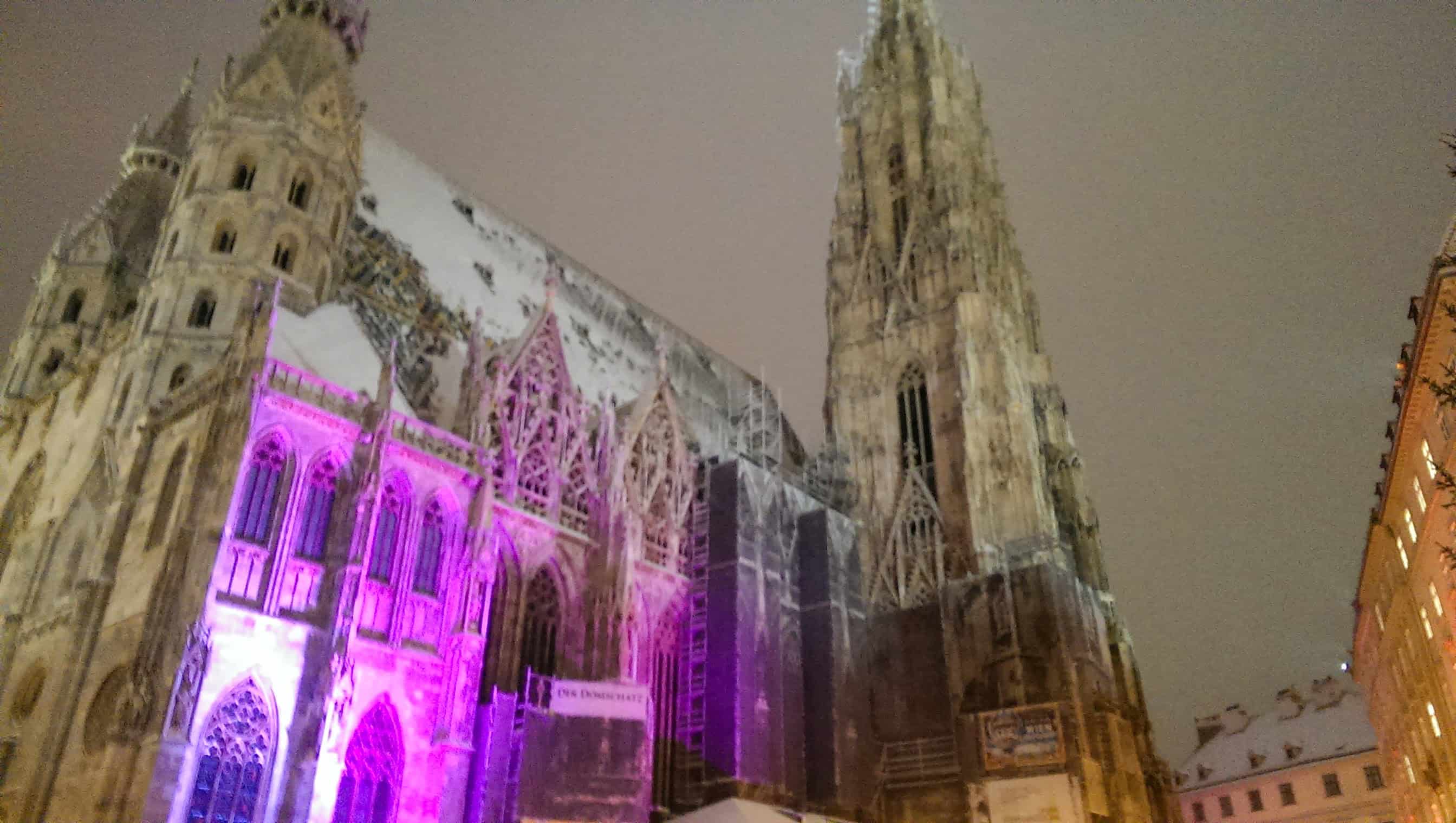
The colorful tiled roof is stunning, but I think the cathedral becomes even more impressive when you step inside and realize how much history these walls have witnessed.
Construction began in the 12th century and the cathedral has survived wars, sieges, fires, and centuries of political change.
If you have the time and energy, consider climbing one of the towers. The views over Vienna’s rooftops are fantastic and give you a completely different perspective of the city.
The square surrounding the cathedral is always busy with musicians, street performers, and visitors. So it’s one of the best places in Vienna for people watching.
Visit the Hofburg Palace
If Schönbrunn was the Habsburgs’ summer residence, the Hofburg was where the empire was actually governed by emperor Franz Joseph.
For more than six centuries, this enormous palace complex served as the political center of one of Europe’s most powerful dynasties.
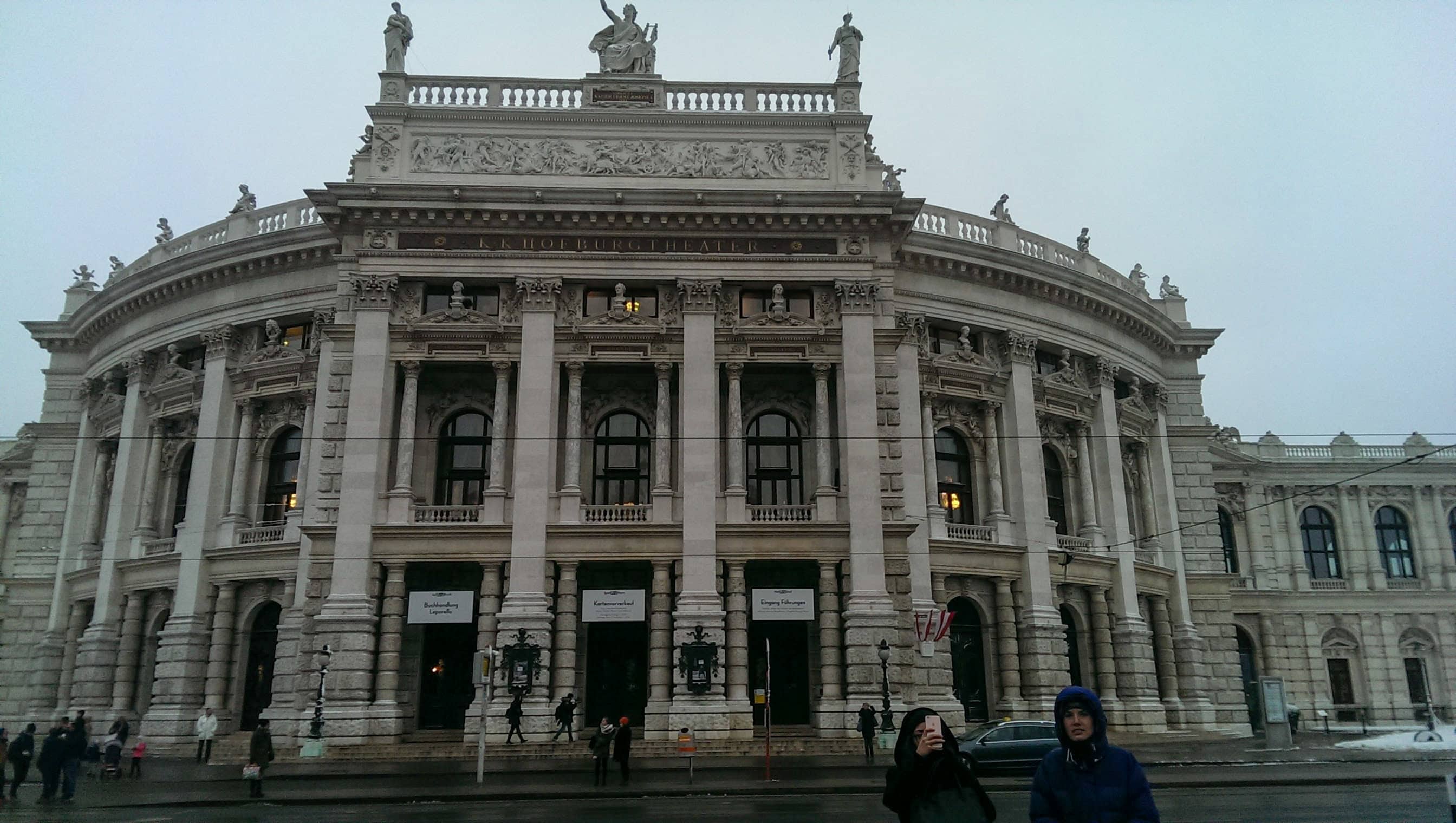
Today, it’s less of a single attraction and more of a collection of museums, courtyards, royal apartments, and historical buildings.
If you’re interested in Sissi, don’t skip the Sissi Museum. It offers a more personal look at her life and challenges some of the myths created by the famous movies.
One of the things I love most about the Hofburg is simply wandering through the courtyards. Everywhere you look there are statues, grand facades, and reminders of Vienna’s imperial past.
It’s impossible not to feel the scale of history here.
Walk through Heldenplatz and Burggarten
Before dinner, spend some time exploring the beautiful parks surrounding the Hofburg.
Burggarten is one of my favorite green spaces in the city and home to the famous Mozart statue.
End the day with dinner in the historic center
For dinner, choose one of Vienna’s traditional restaurants and try classic Austrian dishes.
Wiener Schnitzel is the obvious choice, but don’t overlook Tafelspitz, goulash, or seasonal specialties.
Pair your meal with Austrian wine.
Austria produces some excellent wines that don’t get nearly as much international attention as they deserve.
After dinner, take one final stroll through the illuminated city center.
Vienna is especially beautiful at night, so it’s the perfect ending to your first day.
Day 2: Belvedere Palace, Museums, and Vienna’s Local Side
Start your morning at Belvedere Palace
Begin your second day at Belvedere Palace, one of the most beautiful landmarks in Vienna.
While Schönbrunn tends to get most of the attention, I’ve always had a soft spot for Belvedere. The palace feels slightly less overwhelming and the gardens are absolutely stunning.
What makes it even more special for me is its connection to my hometown of Oradea, Romania.
If you’ve read my guide to Oradea, you might remember that the city’s famous Baroque Palace was inspired by Belvedere Palace. Seeing the similarities between the two is fascinating, especially since I grew up visiting one and later explored the other.
Belvedere is actually made up of two palaces connected by formal gardens: the Upper Belvedere and Lower Belvedere.
The palace was originally built as the summer residence of Prince Eugene of Savoy, one of the most successful military commanders in Habsburg history.
It later became associated with the imperial family, and Empress Elisabeth (Sissi) spent time here as well.
The gardens are worth exploring even if you don’t plan on visiting the museums inside. The fountains, sculptures, and perfectly symmetrical pathways create some of the most beautiful photo opportunities in Vienna.
See Gustav Klimt’s “The Kiss”
Inside Upper Belvedere you’ll find one of Austria’s most famous artworks.
Gustav Klimt’s The Kiss.
Even if you’re not normally a museum person, I think this painting is worth seeing in person.
It’s much larger than most people expect and the gold details are stunning up close.
The museum also contains an impressive collection of Austrian art spanning several centuries, but let’s be honest, most visitors are here for Klimt.
Arrive early if possible because this room gets crowded later in the day.
Walk along the Ringstrasse
From Belvedere, make your way toward Vienna’s historic center via the Ringstrasse. I usually take the tram or walk toward the Ringstrasse depending on energy.
This grand boulevard circles the old city and is lined with some of Vienna’s most impressive buildings.
As you walk, you’ll pass the Vienna State Opera, the Parliament Building, City Hall (Rathaus), the University of Vienna, and numerous historic palaces.
One of the things I love most about Vienna is that simply walking around feels like sightseeing.
Some cities save their beauty for a handful of landmarks. Vienna seems determined to impress you on every single block.
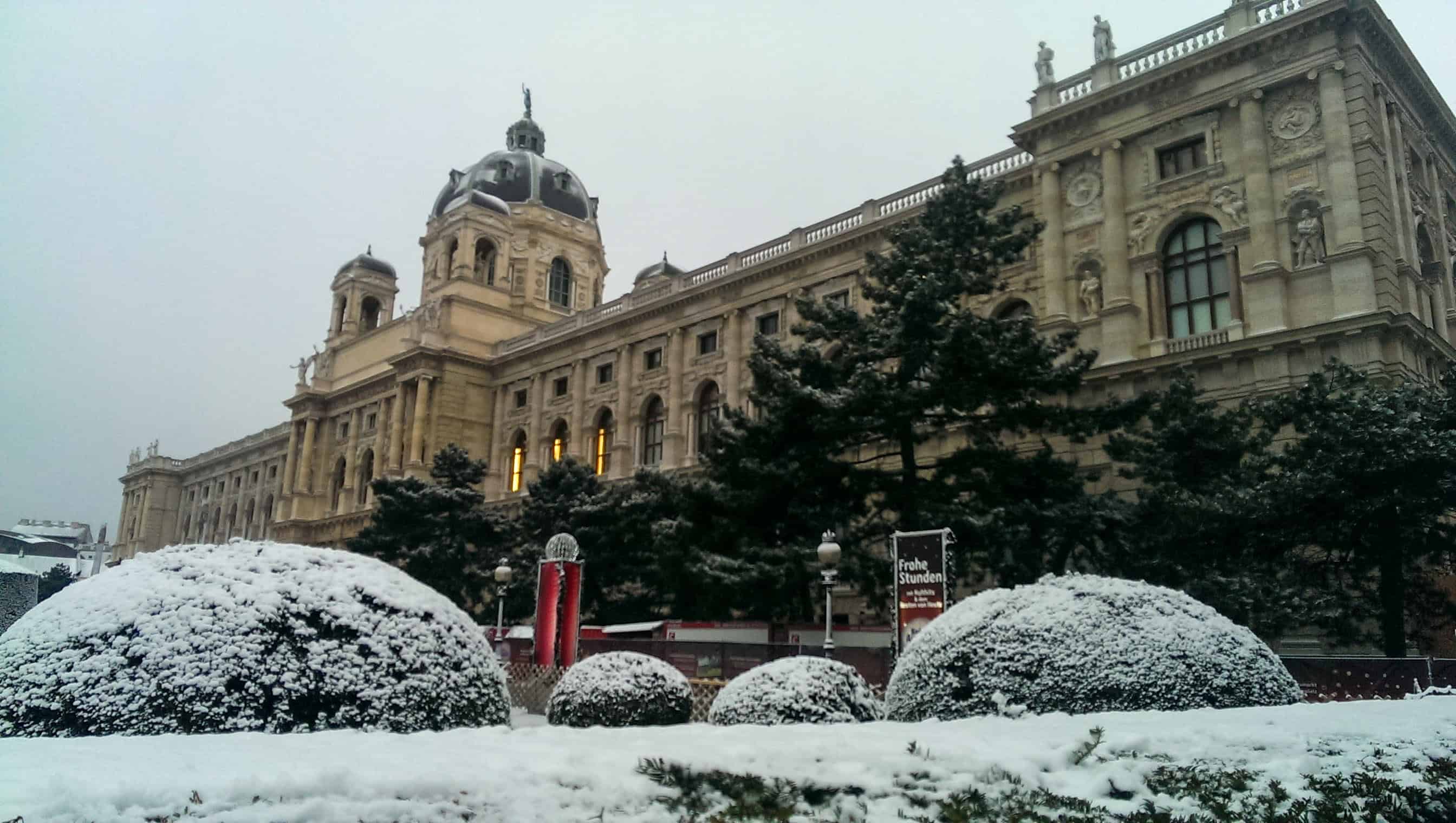
The architecture here is incredible and the entire area feels like an open-air museum.
Visit the Kunsthistorisches Museum
If you only visit one museum in Vienna, make it the Kunsthistorisches Museum.
The building itself is almost as impressive as the collection inside.
Massive staircases, marble columns, elaborate ceilings, and grand halls make you feel like you’ve stepped into a palace rather than a museum.
The collection includes works by Rembrandt, Rubens, Vermeer, Caravaggio, and countless other masters.
Even if you don’t spend hours studying every painting, the museum is worth visiting simply for the atmosphere.
Take some time to sit in the magnificent central hall and look around. It’s one of the most beautiful museum interiors I’ve seen anywhere in Europe.
Have lunch near the MuseumsQuartier
By now you’ll probably be ready for a break.
The MuseumsQuartier area has plenty of cafés, restaurants, and casual lunch spots.
This is a great opportunity to try another Austrian specialty or simply recharge before the afternoon.
One thing I appreciate about Vienna is that you never feel pressured to rush through a meal.
People genuinely take their time here.
Lunch often feels like part of the experience rather than just a necessity between attractions.
Explore the Vienna State Opera area
After lunch, spend some time around the Vienna State Opera House.
Even if you’re not attending a performance, the building itself is worth admiring.
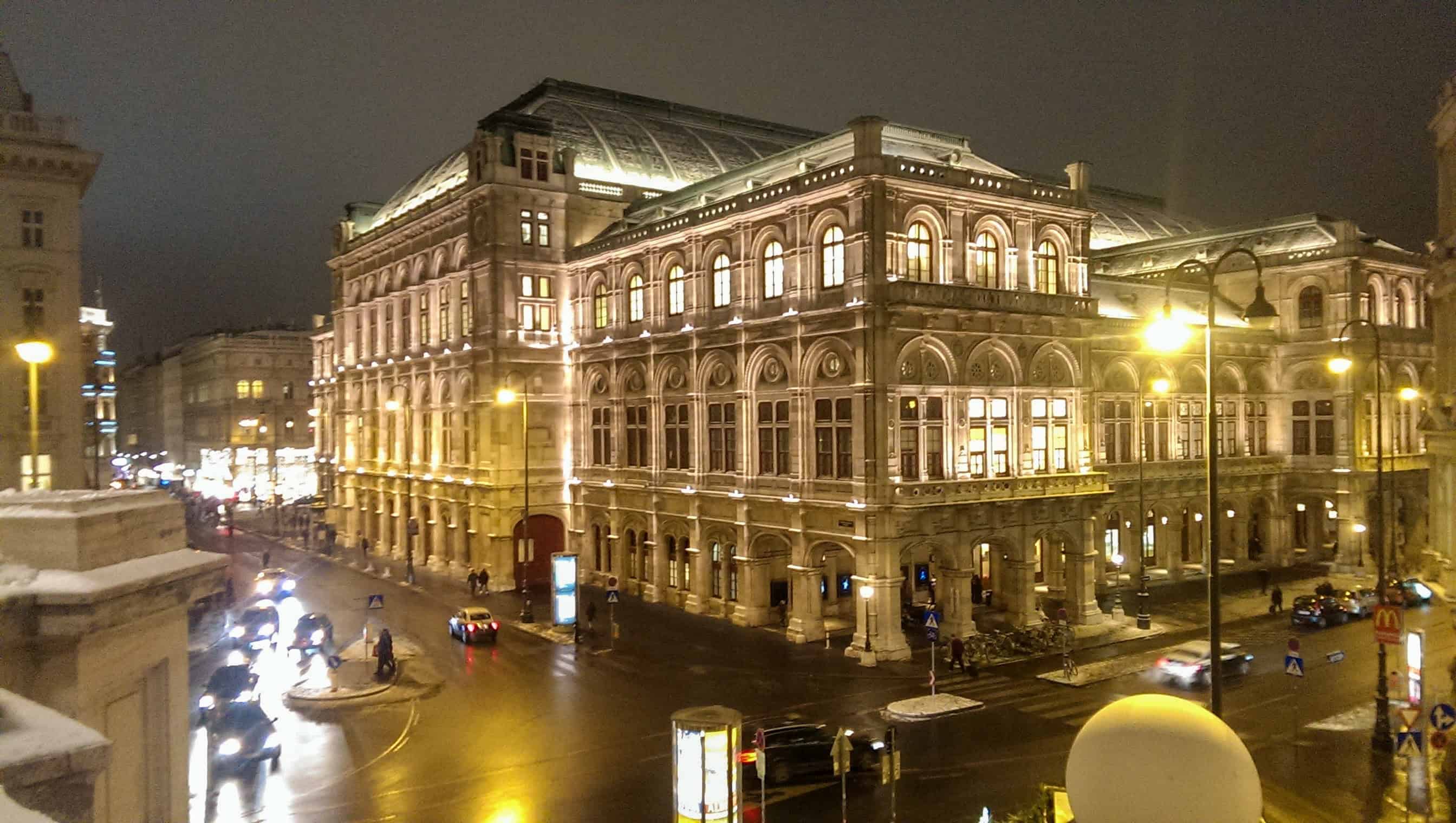
Opera is woven into Vienna’s identity in a way that’s difficult to explain until you visit.
Music is everywhere in this city.
You’ll see posters for concerts, street musicians performing classical pieces. And many references to Mozart, Strauss, Beethoven, and Schubert throughout the historic center.
If you’re interested, consider booking a guided tour of the opera house. Or checking whether there are any performances during your visit.
Another really cool activity in Vienna is to go to a classical music concert. I recommend Vivaldi’s Four Seasons concert in a church.
Browse the Christmas Markets (winter only)
If you’re visiting Vienna in December, I genuinely think the Christmas markets deserve a place on your 2 day Vienna itinerary.
I have such strong memories of coming here as a child during the holiday season.
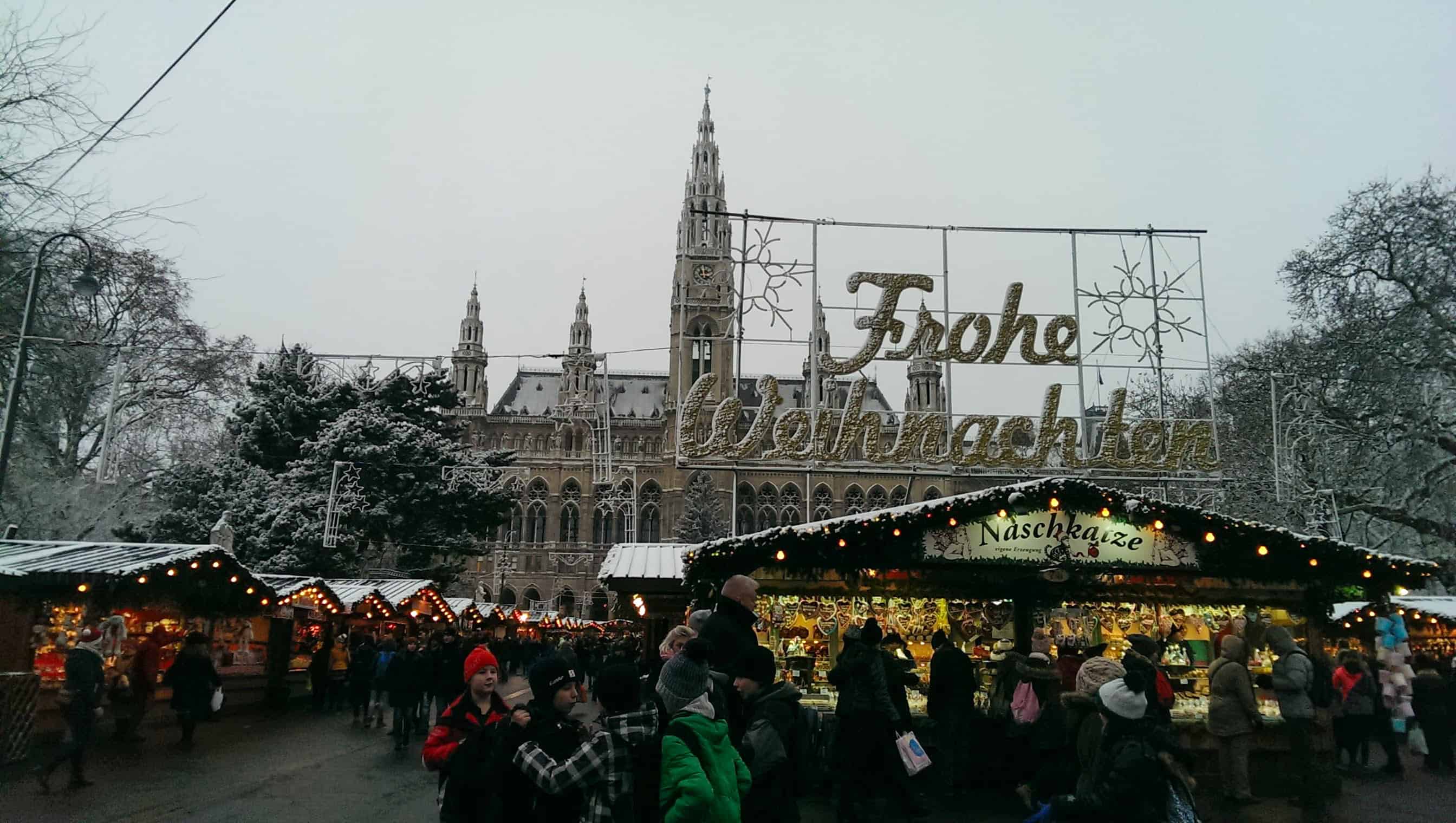
My favorite treat was always the fruit skewers covered in chocolate. I specifically remember getting bananas dipped in chocolate on a stick and thinking they were the greatest thing ever.
Even now, years later, I still look for them whenever I visit Vienna at Christmas.
The market in front of Rathaus is the most famous and arguably the most beautiful. The illuminated City Hall creates a magical backdrop, especially after sunset.
You’ll find mulled wine, handmade gifts, ornaments, roasted chestnuts, gingerbread, and countless seasonal treats.
It’s touristy, yes.
But it’s also one of those experiences that makes Vienna feel genuinely magical.
If you plan on visiting for Christmas markets, check out my guide on the best Vienna hotels near Christmas Markets to help you pick where to stay.
Ride the giant Prater Ferris Wheel
For a completely different side of Vienna, head to the Prater Park in the late afternoon.
The Prater is home to Vienna’s famous Giant Ferris Wheel, one of the oldest operating Ferris wheels in the world.
The surrounding amusement park has a fun, nostalgic atmosphere that feels very different from Vienna’s imperial palaces and museums.
I’ve always loved this part of the city because it reminds me that Vienna isn’t only about emperors and grand buildings.
It’s also a city where locals come to relax and have fun.
The ride itself offers fantastic views over Vienna and is especially beautiful as the sun begins to set.
End your trip with dinner and dessert
For your final evening in Vienna, treat yourself to a leisurely dinner followed by one last slice of cake.
Honestly, leaving Vienna without having multiple desserts feels almost wrong.
If you haven’t tried Sachertorte yet, now is your chance.
Or order one of the many other cakes Vienna does so well.
As a kid, my favorite treat wasn’t even cake.
Every Christmas season, I would beg my family to take me to the Christmas Market at Rathausplatz so I could get chocolate-covered bananas and fruit on a stick.
For some reason, that became my Vienna tradition.
Years later, I still think about those chocolate-covered bananas whenever someone mentions Vienna.
It’s funny how travel memories work sometimes.
You remember the palaces and famous landmarks, of course.
But you also remember small things like a favorite dessert, a family tradition, or a childhood photo in the Schönbrunn gardens.
That’s probably why Vienna remains one of my favorite European capitals.
Every visit feels a little bit like coming back to an old friend.
FAQs about this Vienna 2 day itinerary
Is 2 days enough in Vienna?
Yes, I think 2 days is enough to see Vienna’s main highlights if it’s your first visit.
You’ll have enough time to visit Schönbrunn Palace, Belvedere Palace, St. Stephen’s Cathedral, the Hofburg, several famous cafés, and still enjoy Vienna’s coffeehouse culture.
Of course, I could easily spend a week here, but two days gives you a great introduction to the city.
What is the best time to visit Vienna?
Vienna is beautiful year-round, but my favorite times to visit are spring, fall, and December.
Spring and fall bring pleasant temperatures and fewer crowds than the summer months. While December transforms the city into one of Europe’s most magical Christmas destinations.
Is Vienna safe for solo travelers?
Yes, Vienna is safe for solo travelers. I visited so many times, both as a kid and as an adult, and I never had any safety issues.
Of course, be aware of your surrounding, like in any other destination you visit. But it should be a great spot to visit solo.
For more Vienna tips, check out my guide on solo travel to Vienna.
What should I not miss in Vienna?
If it’s your first time in Vienna, I wouldn’t miss:
- Schönbrunn Palace and Gardens
- Belvedere Palace
- St. Stephen’s Cathedral
- The Hofburg Palace
- A traditional Viennese café
- Sachertorte and a Wiener Melange
- The Vienna State Opera area
- The Giant Ferris Wheel at Prater
These attractions give you a great mix of Vienna’s imperial history, culture, architecture, and food scene.
Is Vienna walkable?
Absolutely.
The historic center is very walkable, and many of the main attractions are located within a relatively compact area.
For longer distances, Vienna’s public transport system is one of the best in Europe and makes getting around incredibly easy.
Is Vienna expensive?
Vienna is not the cheapest city in Europe, but I think it offers excellent value for money.
Accommodation tends to be more affordable than cities like Paris, London, or Amsterdam. And public transportation is reasonably priced.
You can also save money by staying just outside the historic center. The main attractions will be just a short metro ride away.
What area should I stay in Vienna?
For first-time visitors, I recommend staying in Innere Stadt (the 1st District) if your budget allows.
You’ll be within walking distance of many of Vienna’s top attractions.
For more recommendations, check out my guide on where to stay in Vienna.
Is Vienna worth visiting?
Yes, Vienna is worth visiting. Without question.
I’ve been visiting Vienna since I was a child and continue to return as an adult.
Very few cities combine imperial history, world-class museums, coffeehouse culture, and quality of life as well as Vienna does.
It’s one of those places that feels elegant without feeling pretentious and historic without feeling stuck in the past.
Can you visit Schönbrunn and Belvedere in the same trip?
Yes, and I highly recommend it.
Many visitors assume the two palaces are similar, but they actually offer very different experiences.
Schönbrunn gives you a deeper look into the Habsburg dynasty and imperial life. While Belvedere is famous for its beautiful gardens and impressive art collection, including Gustav Klimt’s The Kiss.
If you have two days in Vienna, you can comfortably visit both.
✈️ Heading to Vienna soon? Check out these guides:
Planning your next trip? Check out these helpful resources:

Ioana is a Romanian-born solo traveler and full-time travel blogger who has explored 30+ countries since starting her solo adventures at age 31. She shares practical, experience-based travel tips, detailed itineraries, and insider recommendations to help you plan your trips with confidence and experience destinations like a local. Her blog gets 100K+ monthly readers and her Instagram community has 80K+ people. Her work has been featured in BBC, The Daily Express, Euronews, Bored Panda, Yahoo, MSN and more. Learn more about her here.