
Last Updated on July 24, 2026 by Ioana
Madrid is one of my favorite cities in Europe. Since Madrid is such a popular tourist destination, most people know about the major attractions such as Puerta del Sol, Prado Museum, or Plaza Mayor. During the 10 days I spent in the city, I discovered hidden gems in Madrid that rarely make it into typical travel guides. In fact, after I first published this article, a Madrileña left a comment saying she was amazed (and slightly embarrassed!) that she hadn’t heard of several of the spots on this list. This post contains affiliate links. When you make a purchase I may get a small commission at no extra cost to you. Find out more here.
✈️ Planning your Madrid trip?
If you want to keep things simple, these are the best things to book in advance:
🎟️ Top experiences (sell out fast)
- 👉 Prado Museum skip-the-line ticket
- 👉 Royal Palace of Madrid skip-the-line ticket
- 👉 Santiago Bernabéu Stadium ticket
🍽️ Unique experiences in Madrid
- 👉 Spanish Inquisition walking tour
- 👉 Non-touristy tapas & wine tour
- 👉 Flamenco show in Madrid
- 👉 Day trip to Toledo and Segovia
🏨 Where to stay in Madrid
🎓 Want to do something different in Madrid?
One of my favorite experiences from my trip was spending a week learning Spanish at a local school.
If you want to combine travel with something more immersive, I recommend checking out Expanish. They offer separate 20+ and 30+ programs, which makes it a great option if you don’t want a typical classroom vibe.
👉 You can get 10% off your program through my link here
It’s not your typical tourist activity, but it’s honestly one of the most memorable things you can do in Madrid.
Buy cookies from nuns
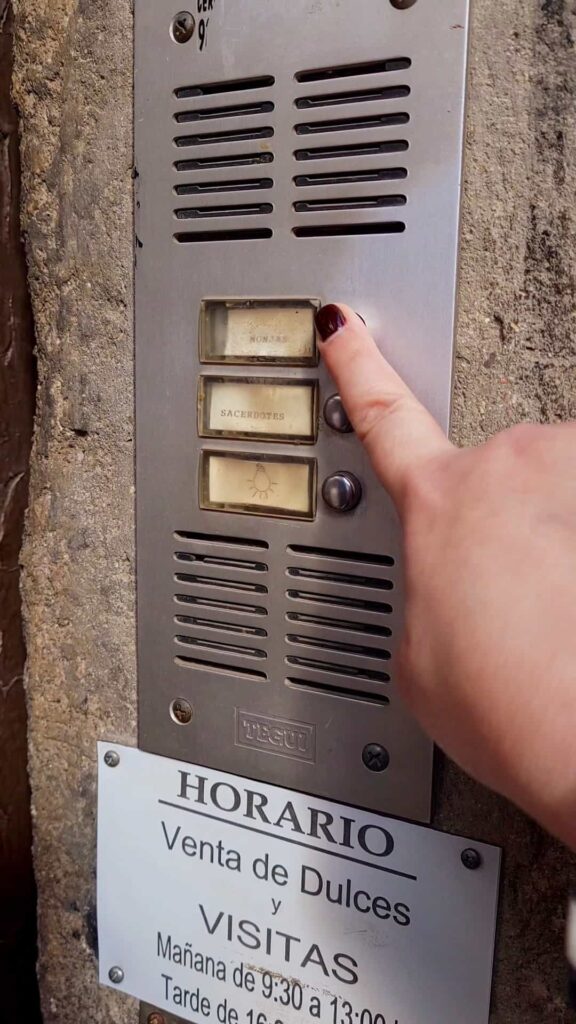
One of the most unusual hidden gems in Madrid is buying homemade cookies from cloistered nuns. Without ever seeing them!
I visited the Convento del Corpus Christi (also known as “Las Carboneras”), tucked away near Plaza Mayor. Finding it felt like a mini adventure in itself.
There’s no flashy sign, just a discreet wooden door and a small buzzer. After ringing the bell, I stepped inside a quiet, dimly lit entrance hall where a rotating wooden hatch (called a torno) separates visitors from the nuns.
You place your order through the wooden screen, slide your cash onto the turntable, and moments later a box of freshly baked cookies rotates back to you.
I bought a box of Nevaditos (powder sugar-dusted cookies) and they were really good. Simple, fresh, and clearly homemade.
It’s such a simple activity, but it feels like stepping into another century. And because many visitors walk right past these convents without realizing what’s inside, it remains one of the city’s most charming hidden experiences.
Tip: Bring cash and check opening hours in advance, as they can vary.
Learn about the history of the Spanish inquisition
If you’re interested in the darker chapters of Madrid’s history, I highly recommend taking an evening walking tour focused on the Spanish Inquisition and the city’s legends.
I joined a small-group night tour through the historic center, starting near Plaza Mayor and winding through dimly lit streets that feel completely different after sunset.
Our guide explained how the Spanish Inquisition operated in Madrid, pointed out former tribunal sites, and shared stories about secret trials and public punishments that once took place in these very squares.
What made the experience especially memorable was the atmosphere. Hearing about centuries-old superstitions and ghost stories while standing in nearly empty medieval alleyways added a dramatic touch you simply don’t get during the day.
As a solo traveler, I also found this to be a great way to meet other travelers in a relaxed setting while learning something meaningful about the city’s past.
If you enjoy history with a slightly eerie twist, this tour is both educational and entertaining.
Get a cube croissant from Panem
I discovered one of the best bakeries in Madrid during my trip there. It’s one of Madrid’s hidden gems as I didn’t see a single tourist when I was there.
It’s called Panem and they make both bread and classic French pastries like croissants, pain au chocolat, palmiers, madeleines. It’s very popular with the locals. There is always a line to enter the store. If you go 10 minutes before they open you won’t have to wait too much.
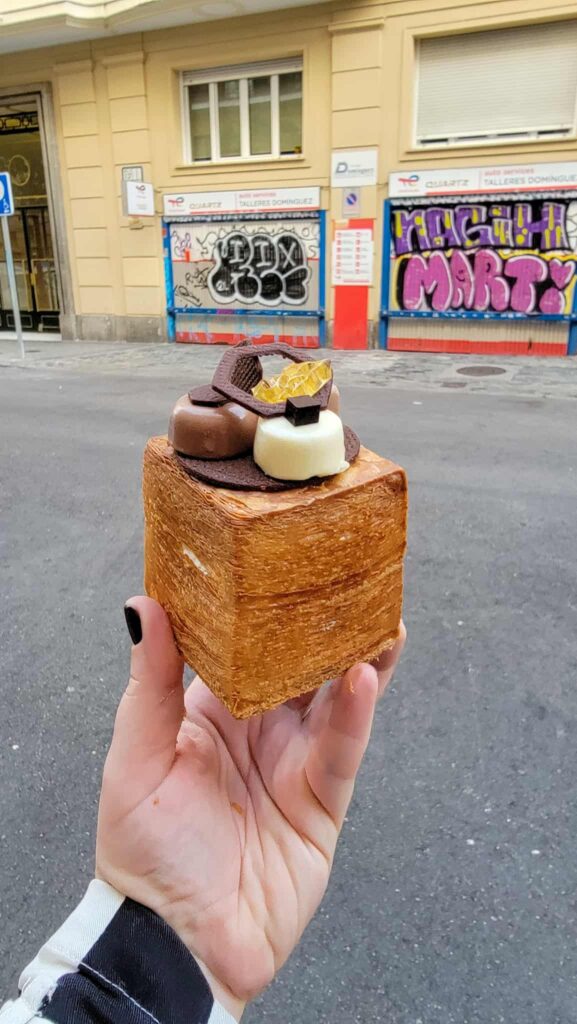
Their invention is the cube croissant. The pastry is very flaky and the filling is to die for. They also decorate it in a very cute way.
They change the cube croissant flavors every week. When I was in Madrid they were selling tiramisu cube croissants. I got one and it was as amazing as it looks.
Unfortunately, the cube croissant is only available on Saturdays. They cost 6 euros. On the pricy side, but I promise you it’s worth it.
If you can’t go on a Saturday to try the cube croissant, don’t worry, everything they make is delicious.
💡 Where to stay to explore these hidden gems
The best areas to stay for this list are Malasaña, La Latina, and Sol since they’re close to many of these spots.
Eat at the oldest restaurant in the world
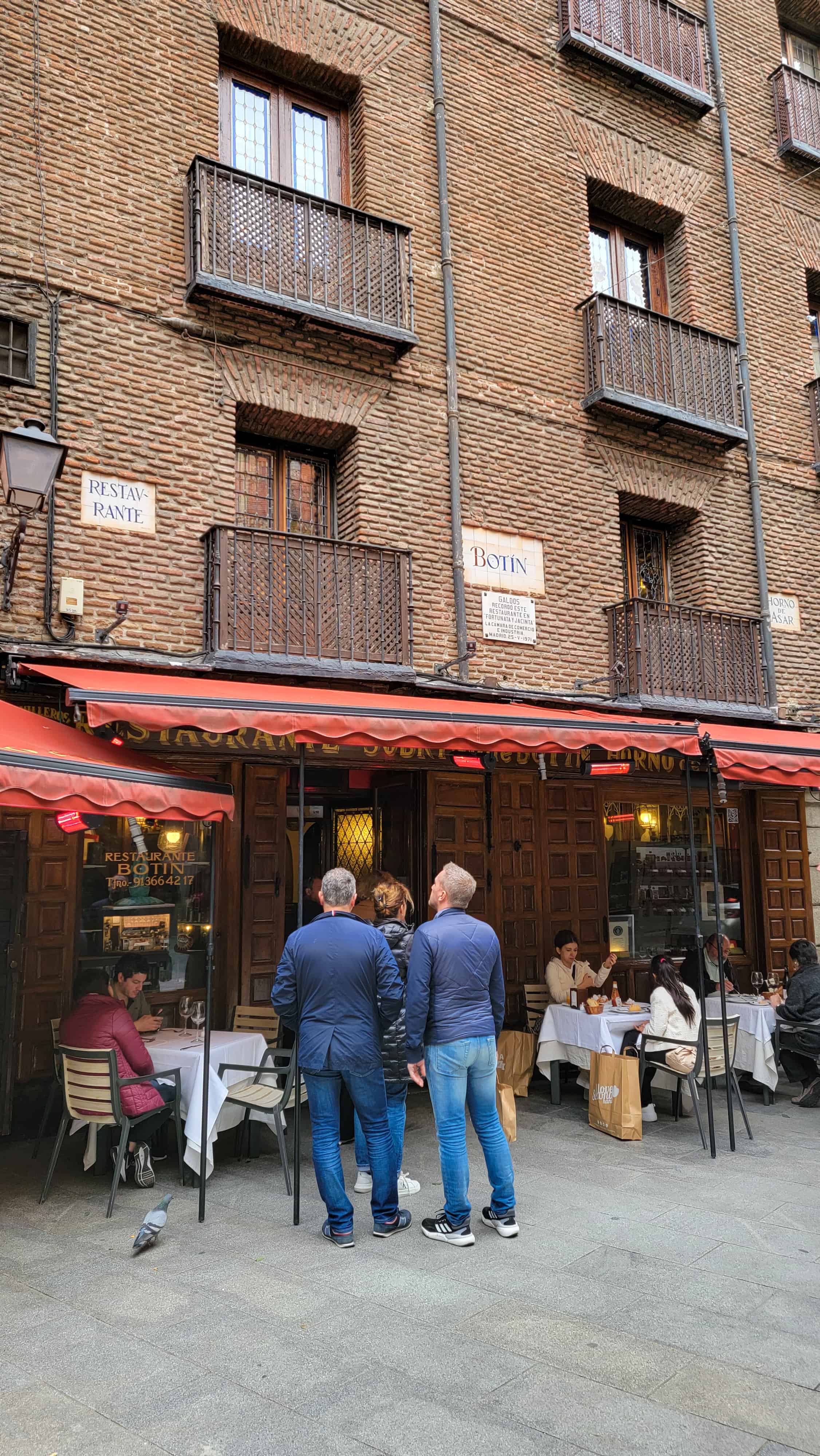
Just a short walk from Plaza Mayor, you’ll find Sobrino de Botín, widely recognized as the oldest continuously operating restaurant in the world.
Founded in 1725, it has been serving traditional Castilian cuisine for nearly three centuries.
I stopped by during my time in Madrid, and even if you don’t dine there, it’s worth stepping inside to see the historic interior.
The narrow staircases, tiled walls, and low wooden ceilings make it feel like you’ve stepped back into the 18th century.
The restaurant is especially famous for its roast suckling pig (cochinillo), cooked in the original wood-fired oven that has supposedly been in use since the restaurant first opened.
Over the years, notable figures such as Francisco de Goya (who is said to have worked there in his youth) and Ernest Hemingway have been associated with Botín.
It’s not exactly a “secret,” but many visitors walk past without realizing they’re standing in front of a Guinness World Record holder. Whether you book a table or simply admire it from the outside, it’s a fascinating piece of Madrid’s living history.
Tip: Reservations are highly recommended, especially during peak travel seasons.
Go on a tour of Las Ventas bullring
Even if you’re unsure how you feel about bullfighting, visiting Las Ventas is an important way to understand a major part of Spanish history and culture.
I toured the Plaza de Toros de Las Ventas, Spain’s largest and most significant bullring, and what struck me most was its scale.
Built in 1929 in a Neo-Mudéjar style, the red-brick façade is impressive from the outside, but stepping into the arena itself gives you a real sense of how central bullfighting once was to Spanish society.
During the tour, you can walk through the seating areas, see the chapel where matadors traditionally pray before a fight, and visit the small museum that explains the traditions and symbolism behind the spectacle.
Whether you view bullfighting as cultural heritage or a controversial practice, the tour provides important historical context.
I appreciated that the visit was structured and informative, making it easier to understand the background rather than just walking around independently.
Tip: If you’re visiting outside of bullfighting season, a guided tour is the best way to access the arena and learn about its history.
Discover Madrid’s street art
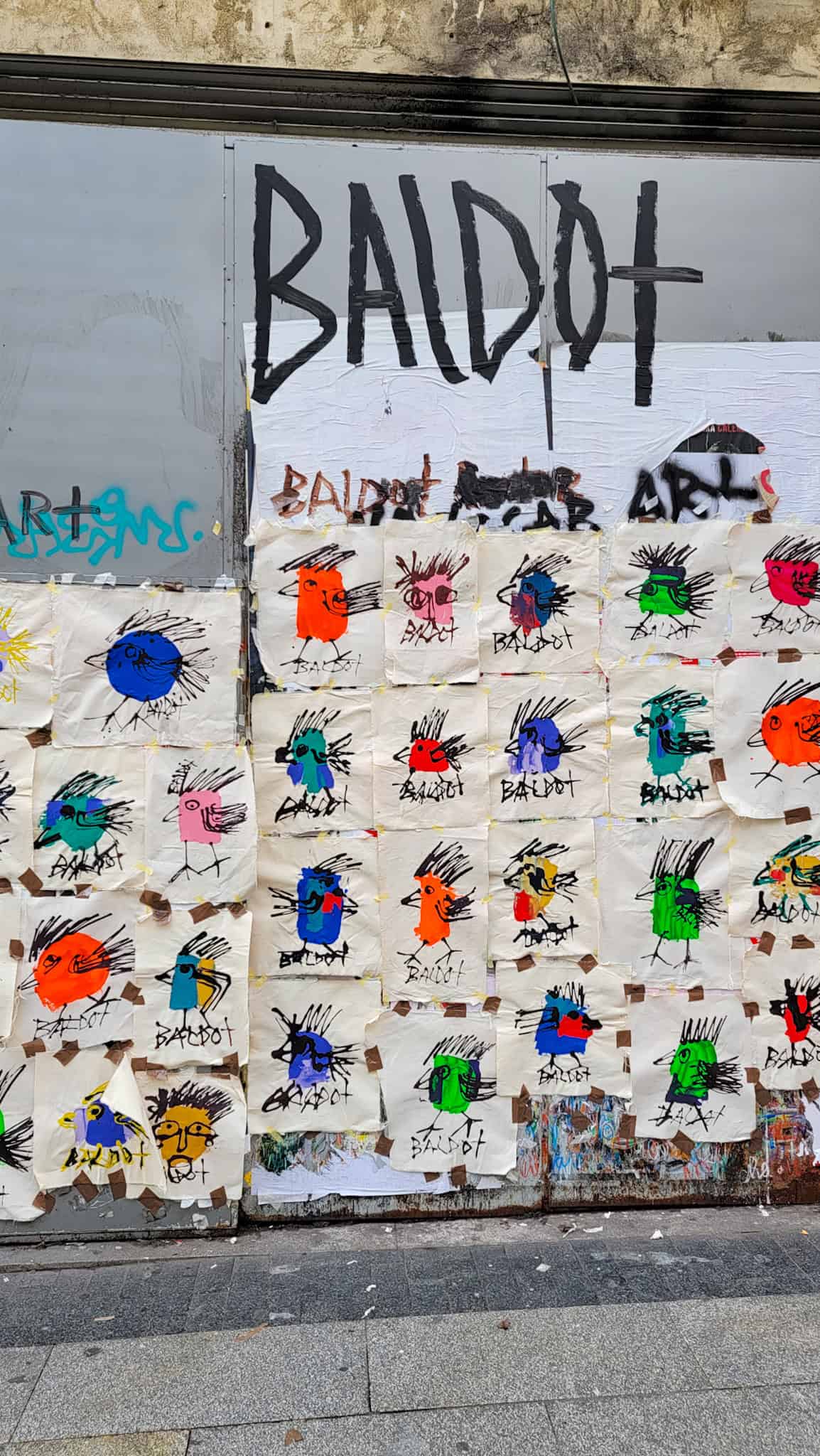
Madrid isn’t just grand boulevards and royal palaces. It also has a vibrant underground art scene, especially in neighborhoods like Lavapiés and Embajadores.
I spent an afternoon wandering through Lavapiés, where entire building façades are covered in large-scale murals, political artwork, and ever-changing graffiti pieces.
Unlike more polished street art scenes in other European cities, Madrid’s feels raw and deeply connected to the neighborhood’s multicultural identity.
A guided street art tour can help you understand the stories behind the murals — from social commentary to local activism — and point out pieces you might otherwise walk past.
Many of the artworks are temporary, so what you see depends on when you visit, which makes it feel like a constantly evolving open-air gallery.
I found this to be one of the most interesting ways to experience a different side of Madrid beyond the historic center.
If you enjoy this kind of local experience, staying in areas like Malasaña or Lavapiés makes it much easier to explore Madrid’s street art and creative spots.
👉 You can check the best hotels in these areas here.
Visit the Egyptian Temple of Debod
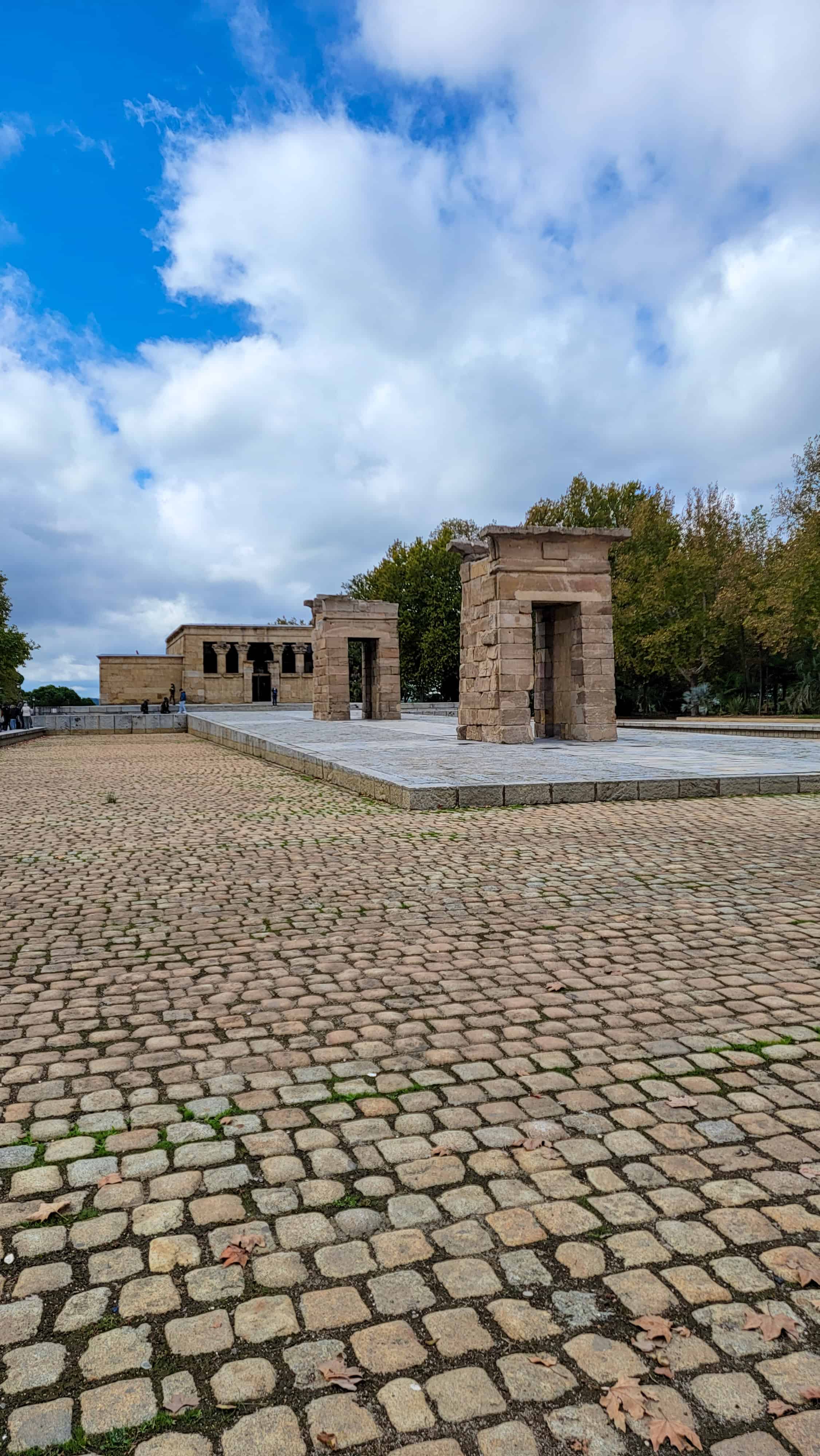
One of the most surprising sights in Madrid is the Temple of Debod, an authentic ancient Egyptian temple standing right in the Spanish capital.
I remember walking past the Royal Palace gardens and suddenly seeing the stone structure reflected in the surrounding water pools. It genuinely feels out of place at first.
The temple was gifted to Spain by Egypt in 1968 as a thank you for helping save the Abu Simbel temples from flooding after the construction of the Aswan High Dam.
What makes this spot truly special, though, is its location. The park next to the temple offers one of the best sunset views in Madrid.
From here, you can see the Royal Palace and parts of the western skyline glowing in golden light. It’s especially beautiful in the evening when the temple is illuminated.
I loved coming here toward the end of the day. It’s peaceful, photogenic, and completely free to visit.
Get a panoramic view of Madrid from Palacio de Cibeles
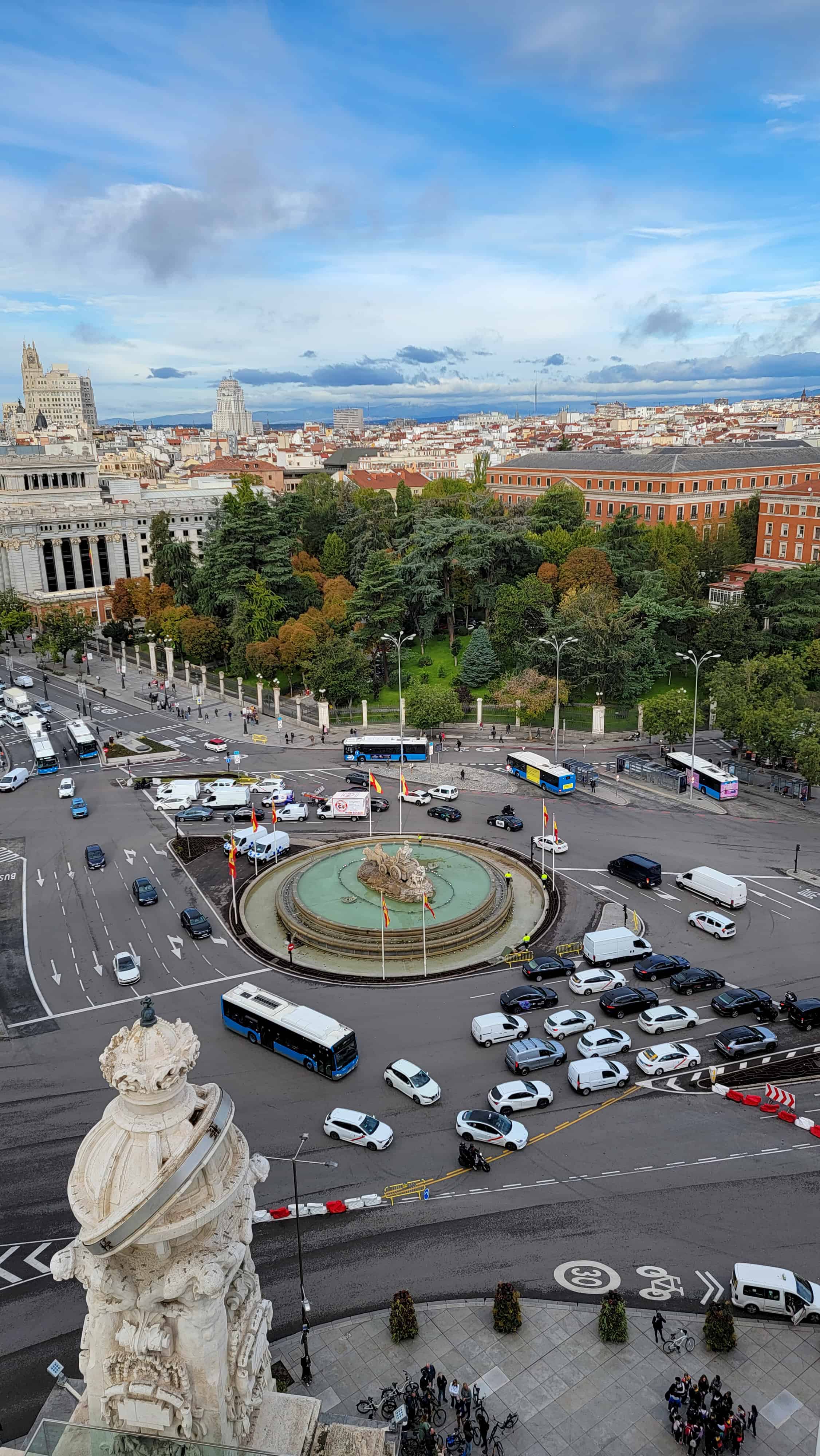
I am obsessed with pretty views, so I seek them everywhere I travel to. That’s also how I picked the apartment I currently live in.
That’s how I ended up at the observation deck of Palacio de Cibeles and it quickly became one of my favorite viewpoints in Madrid.
After taking the elevator to the top, you step out onto an open-air terrace with sweeping 360-degree views over the city.
From here, you can see Gran Vía stretching into the distance, the rooftops of central Madrid, and even the mountains on a clear day. The iconic Metropolis Building dome is particularly photogenic from this angle.
Entry costs just a few euros, and you’re given a specific time slot, which keeps it from feeling overcrowded. Compared to other European capitals, it’s surprisingly affordable for such a prime viewpoint.
I went right after they opened in the morning, and there were only about five other people on the terrace. I could take photos without crowds in the background and really enjoy the view.
Take a walk on Paseo de Recoletos
Paseo de Recoletos is one of the main boulevards in Madrid. It is located near Paseo del Prado.
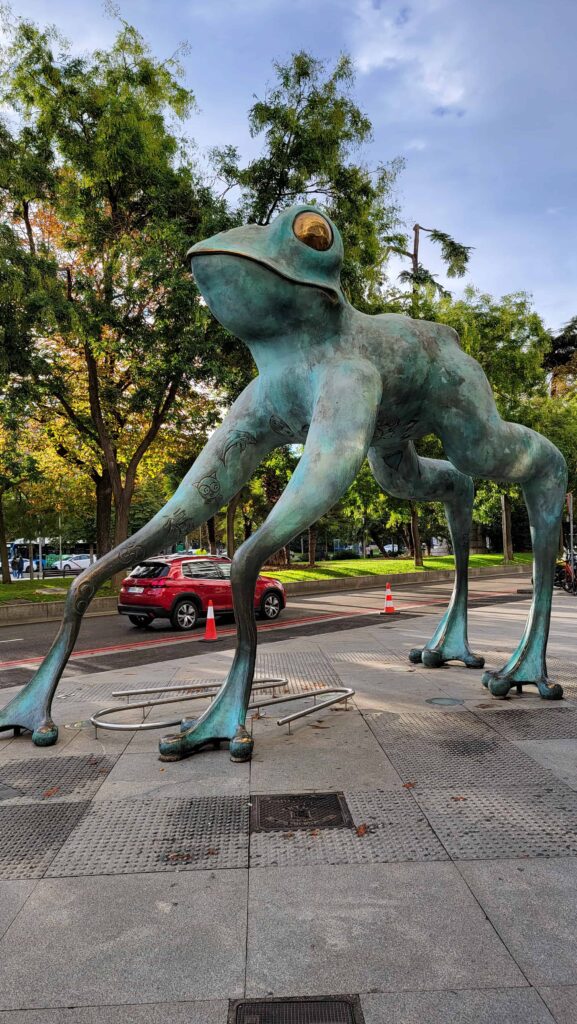
One of my favorite ways to spend a morning in Madrid is strolling along Paseo de Recoletos, a wide, tree-lined boulevard connecting Plaza de Colón to the heart of the city.
I started my walk near the Prado Museum and slowly wandered toward Plaza de Cibeles, enjoying the calm atmosphere before the streets got busy.
Along the boulevard, you’ll discover a mix of historical monuments and quirky surprises. I stopped to see the lucky frog statue, a small bronze sculpture engraved with symbols of good fortune from multiple cultures.
Locals and visitors alike pause to rub its belly for luck. I couldn’t resist trying it myself! Further along, the statue of Christopher Columbus and the impressive National Library of Spain offer a mix of history, art, and architecture to admire during your walk.
What makes Paseo de Recoletos especially enjoyable is how it balances history with relaxation: benches shaded by trees invite you to linger, street performers add a bit of energy, and the wide sidewalks make it perfect for a peaceful solo stroll.
Eat churros con chocolate at San Ginés
One of the must try foods in Spain is churros. They serve them with hot chocolate, but it’s that thick, creamy kind of hot chocolate. The combination is amazing! Plus, calories don’t count while traveling, right?
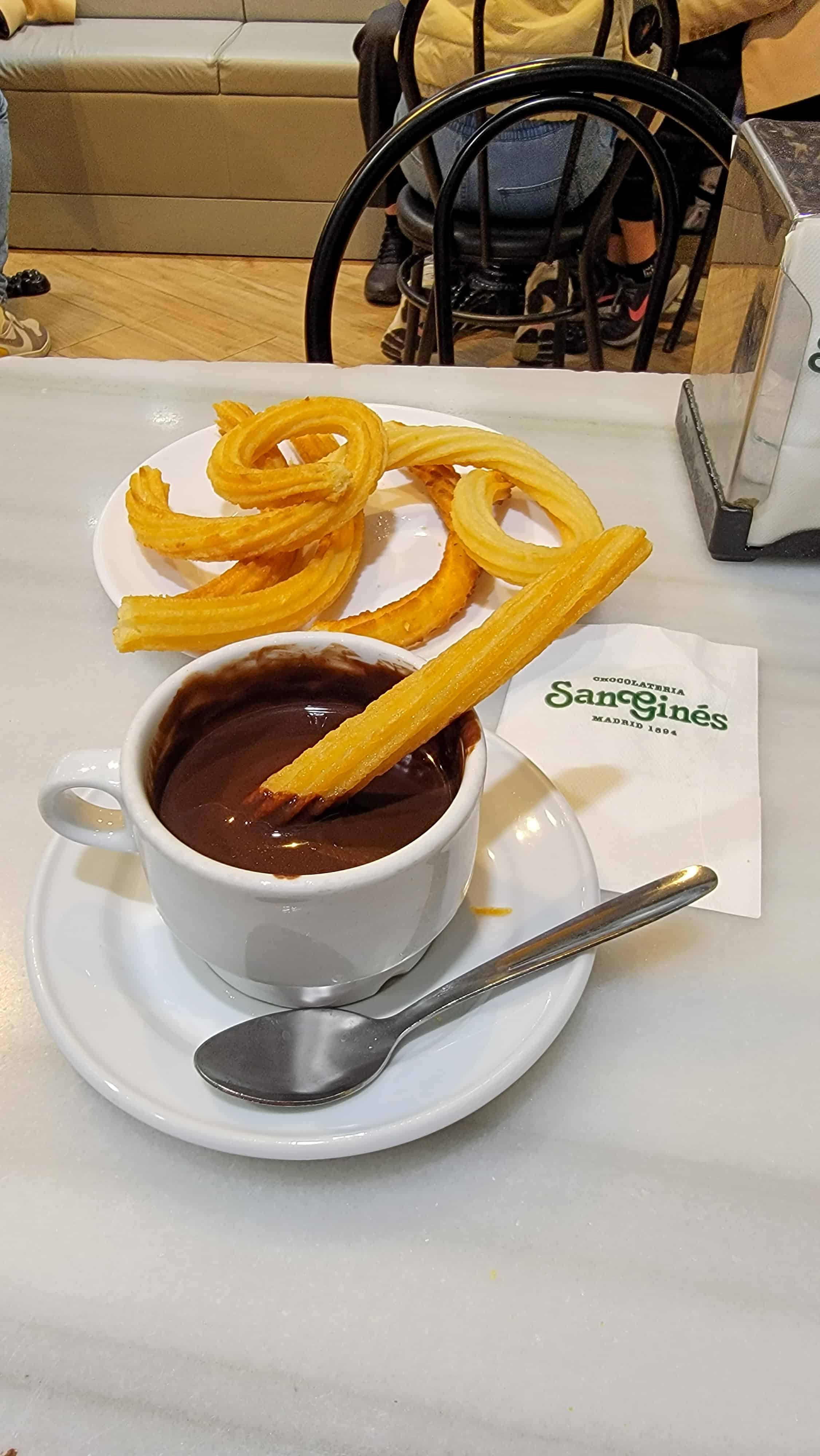
No visit to Madrid is complete without churros con chocolate, and for me, one of the most iconic spots is Chocolatería San Ginés.
I went there on a chilly morning, and stepping inside felt like stepping back in time: dark wood paneling, tiled walls, and the aroma of frying dough filling the air.
I ordered a plate of churros with thick, creamy hot chocolate. The churros were perfectly crisp on the outside and soft in the middle, and the chocolate was rich enough to dip the churros without ever feeling watered down. I can honestly say it’s one of the most indulgent breakfasts I’ve had in Europe.
San Ginés has been serving churros since 1894, and its location near Puerta del Sol makes it easy to pop in during a morning stroll.
They’re open every day of the week, so whether you’re arriving early or finishing a late-night walk, you can enjoy this Madrid classic.
Tip: If you want a quieter experience, go early in the morning. I arrived just after opening and there were only a few other people, making it easy to savor the churros without the usual crowds.
See the peacocks in the hidden gardens of Retiro Park
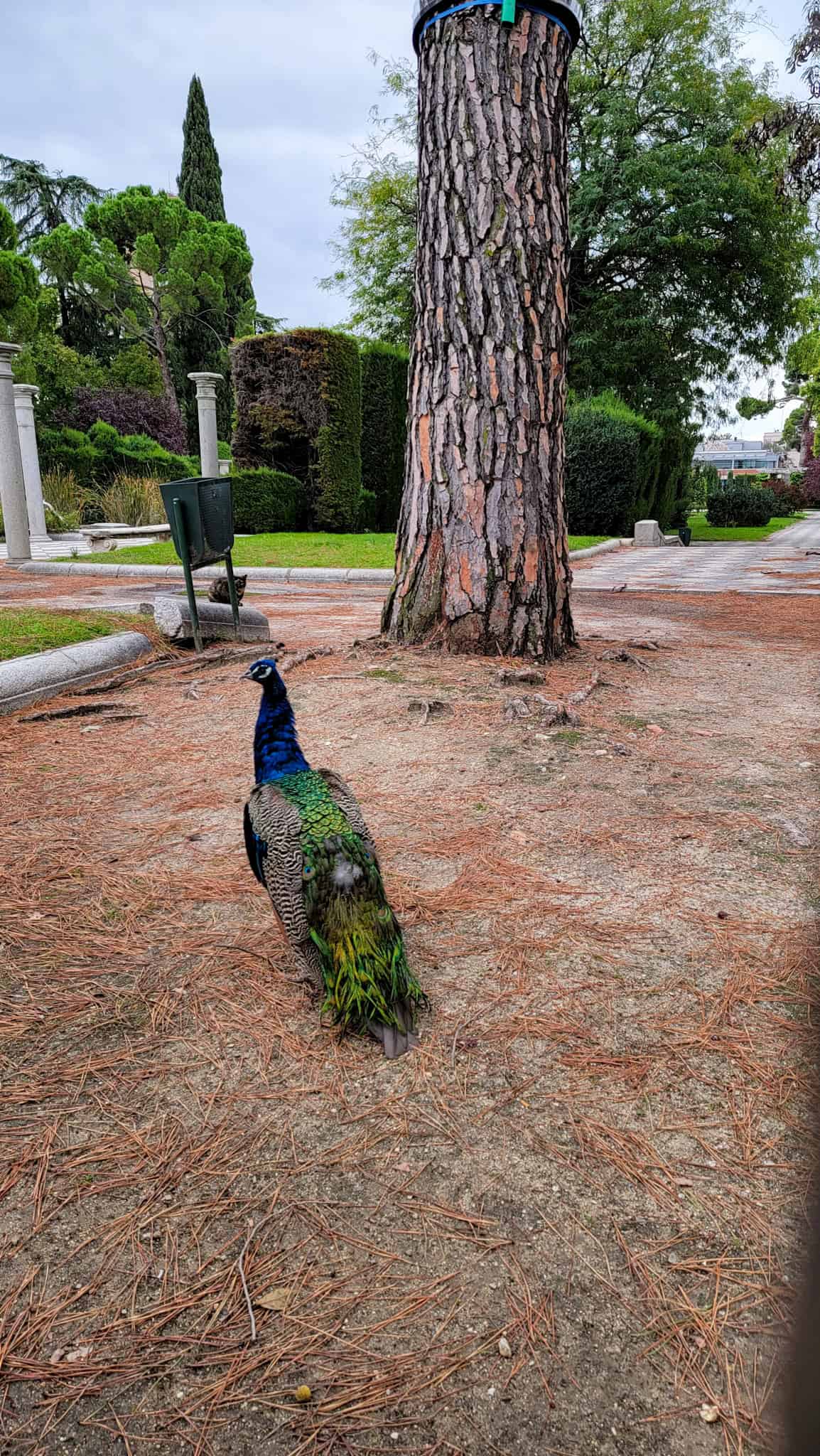
One of Madrid’s best-kept secrets is Jardines de Cecilio Rodríguez, tucked inside the sprawling El Retiro Park.
I wandered through these gardens on a quiet morning, and I loved the peacocks strutting across the pathways. The serene atmosphere made it feel like I had stepped into a different world in the middle of the city.
The gardens themselves are beautifully designed, with meticulously maintained flower beds, fountains, and shaded walkways.
Beyond the peacocks, El Retiro is full of other cool spots: the Rose Garden bursts with color in spring, the Crystal Palace gleams like glass in the sunlight, and the lake offers a peaceful spot to watch rowboats glide by.
This is one of those places that made me love Madrid. Staying near Retiro makes it much easier to explore spots like this and enjoy the area at a slower pace.
👉 You can check the best hotels near Retiro here.
See the world’s only statue dedicated to the devil
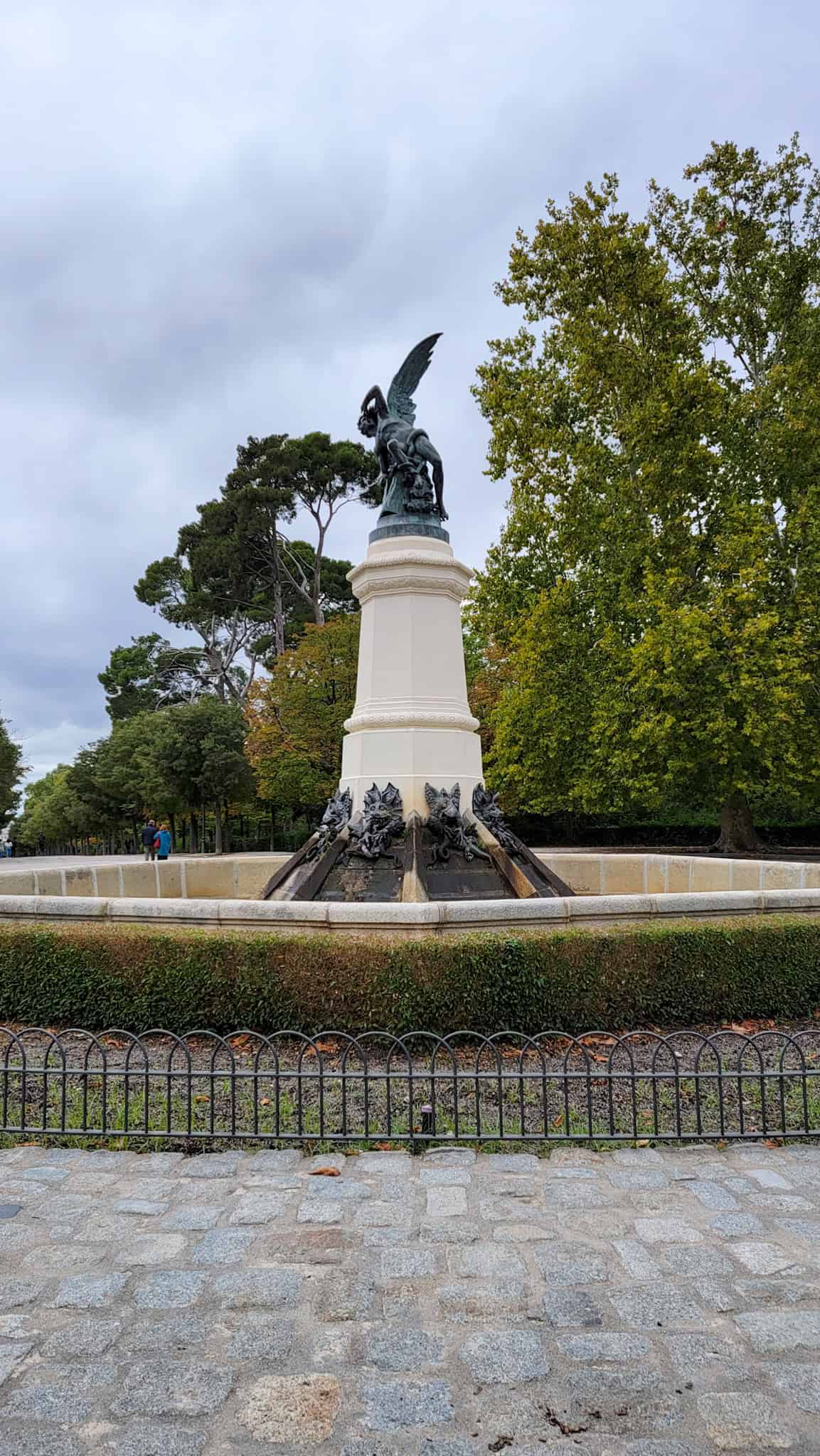
Hidden within El Retiro Park is one of Madrid’s most unusual sights: the Fountain of the Fallen Angel.
I stumbled upon it while wandering the park’s quieter paths, and immediately noticed the dramatic bronze statue perched atop a fountain.
What makes it remarkable (and slightly eerie!) is that it’s widely recognized as the only public statue in the world dedicated to the devil.
The sculpture depicts Lucifer mid-fall, twisting in a moment frozen in bronze. Surrounded by a small pond and shady trees, it feels surprisingly secluded, and the atmosphere adds a touch of mystery to your stroll.
Locals often pass by without noticing it, which makes discovering it feel like a real hidden gem moment.
Tip: Combine this visit with a walk through the Jardines de Cecilio Rodríguez; they’re just a few minutes apart and make a perfect off-the-beaten-path circuit in Retiro Park.
Take a day trip to Segovia and Toledo
If you’re in Madrid, a day trip to Segovia and Toledo is an absolute must. I joined a guided tour departing from near the Palacio Real, and it was a full day packed with history, architecture, and unexpected moments.
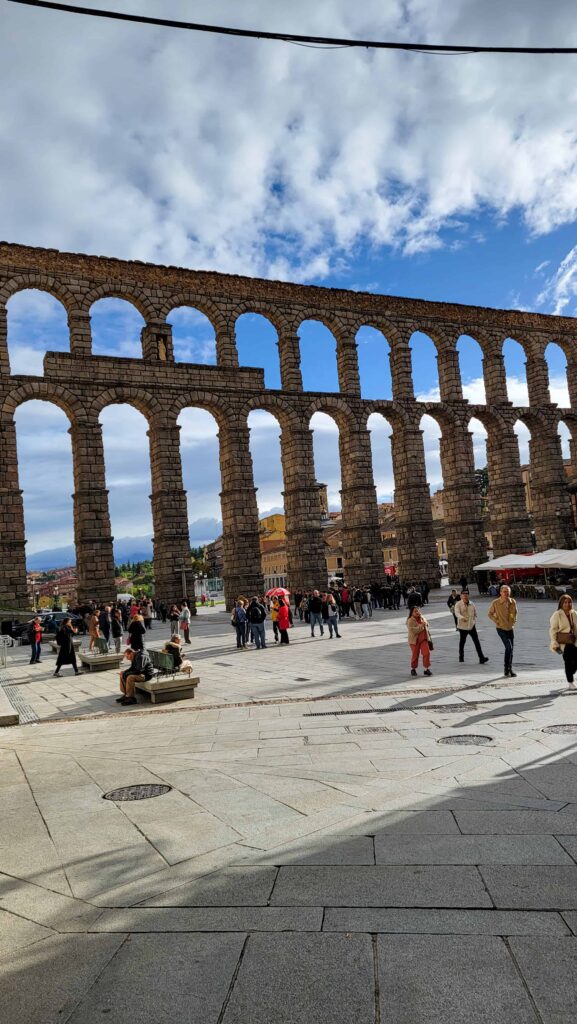
In the morning, we headed to Segovia, a UNESCO World Heritage Site. Walking under the massive Roman aqueduct, I couldn’t believe how well-preserved it is. A true engineering marvel!
At the Alcázar, it’s easy to see why Disney used it as inspiration for Cinderella’s Castle; climbing the towers offers panoramic views over the city and surrounding countryside.
The Gothic Segovia Cathedral is another highlight, with soaring arches and intricate stained glass that made me pause in awe.
After a quick lunch back in Madrid, we continued to Toledo, Spain’s former capital. Wandering its winding medieval streets feels like stepping into another century.
I visited the church where El Greco lived and saw his masterpiece, The Burial of the Count of Orgaz. Seeing it in person is nothing like a photo. The city’s mix of Christian, Jewish, and Muslim history makes every corner fascinating.
It was a long day, but one of the best parts was meeting a fellow solo traveler from Greece who shares my name. She became one of my best friends.
Tip: Wear comfortable shoes and bring a bottle of water. Both cities involve a lot of walking, but it’s worth it.
FAQ’s about Madrid
Where should I stay in Madrid?
Here you can find the best Madrid hotels with indoor pool.
And here is a guide to the best hotels near Madrid Christmas market.
If you don’t have time to read the full blog posts here are a few suggestions.
Mid-budget hotels
I stayed at NH Collection Madrid Palacio de Tepa in the city center. It’s about a 7-minute walk to Plaza Mayor. The hotel room was clean and cozy, and service was 10/10. They even gave me some brownies since I visited around my birthday. So sweet! You can read my full review of this hotel here.
Other good mid-budget options are Hyatt Centric Gran Via Madrid, Only YOU Boutique Hotel, and Hotel Riu Plaza España.
Luxury hotels
If you have a higher budget and are seeking a more luxurious option in the city center, then Santo Mauro – a Luxury Collection Hotel, Four Seasons, and Mandarin Oriental Ritz are all great options.
Hostels
Unfortunately, I am not the right person to recommend you any hostels. I am in my 30s and I value comfort, so I will always choose to stay at a hotel vs a hostel. I can see how a hostel is a great option for younger people, but I’m at a different stage in life, so I prefer hotels.
Airbnb
I also tend to pick hotels over Airbnbs because I feel like it’s less of a risk and it’s a more reliable option. One time when I visited Miami with my friends we booked an Airbnb that looked great in pictures but looked really bad in reality. We ended up going to a hotel instead. After that experience I tend to avoid Airbnbs altogether.
Best time to visit Madrid
I went in October and it was perfect. The weather is still pretty warm, but there are less tourists compared to the peak summer months. May could also be a great option.
I tend to avoid Europe summer travel because it gets so hot and there are so many tourists everywhere that it takes away from the experience for me.
I’d rather wait a few months and go in the fall so I can properly enjoy the destinations I’m visiting.
Weather in Madrid gets very hot during the summer months, so it can be very uncomfortable to spend the entire day outside, exploring.
August is usually vacation month for most European countries, including Spain, so many restaurants and shops will be closed.
How can I get to the city center from Adolfo Suarez Madrid–Barajas Airport?
Train
You can take the RENFE train from terminal T4. If you land at other terminals you can take a free shuttle bus to take you to T4 to catch the train.
A round trip costs 5.2 euros. There are trains leaving T4 every 15 minutes. The trains do not operate during the night though. If you take the train you should get to Atocha Train Station in about 30 minutes.
Bus
You can take Bus Line 203 which will take you to Atocha Train Station in about 45 minutes.
Follow the “Airport Express Aeropuerto” sign to get to the two bus stops located at the Departures and Arrivals levels of T1 and T2, as well as the on the ground level of T4.
Buses run 24/7. Bus tickets cost 5 euros and you can buy them on the bus using either cash or a credit card.
Metro
Taking the metro is a bit more complicated. From the airport you can take the Pink Metro Line 8.
However, you will have to switch to Metro Line 10 or Metro Line 1 at Nuevos Ministerios subway station.
There are two airport metro stations, one at T4 and another one on the first floor of T2 which serves T1, T2, and T3. A ticket costs around 5 euros.
Taxi / uber
This is the most convenient option since it leaves you right in front of your hotel. Taxis have a flat fee of 30 euros. Ubers are a bit cheaper. Alternatively you can also schedule a private transfer.
How to get cell phone data when visiting from abroad?
The cheapest and most convenient way to get data while visiting from abroad is to buy an eSIM. An eSIM is a digital SIM that lets you activate a data plan from a provider without having to use a physical SIM card. They are super easy to use.
I use Airalo. You can go to their website, select the country you’re traveling to, select how many GB of data you want, and how many days you want the eSIM to be active for. After you pay you will receive a confirmation email with instructions on how to activate the eSIM.
You can activate it on your phone and the process takes under 1 minute. Once the eSIM is activated you don’t have to do anything else. When you’re at your destination you will automatically get data.
Is Madrid safe for a solo female traveler?
Yes, Madrid is pretty safe, but you do have to be aware of your surroundings. There were 2 instances when I didn’t feel safe, both of them due to pickpockets:
- A hotel concierge alerted a group of tourists walking across the street from the Prado museum that there were pickpockets trying to steal from them.
- On my day trip to Segovia and Toledo the tour guide asked us to let two people pass by. It turns out that those two people were pickpockets who were trying to target our group.
As long as you’re on high alert, as you should be anytime you travel solo, you’ll be fine.
Do I need cash for my trip to Madrid?
I didn’t use cash at all when I visited, I paid for everything with a credit card. But it’s always recommended to carry some cash with you so you can tip tour guides or buy souvenirs or something else from small mom-and-pop shops who don’t accept credit cards.
Pro tip: always get cash from an ATM in the airport instead of going to an exchange place. Your bank will always have better exchange rates when taking out cash in a foreign currency from an ATM.
How can I get around Madrid?
Madrid is a very walkable city and it has a great subway system with stations near all major attractions in case your hotel is further away from the city center. If you don’t like to take the subway you can always take an uber.
Do I have to tip in Madrid?
Tipping is not mandatory, but it is highly encouraged. I usually leave 1-2 euros as tip when I eat out. They highly appreciate it when you do this.
Do I need to book tickets for attractions in advance?
I highly recommend you book all the tickets online in advance of your trip. Madrid is a very popular destination so it’s very likely that tickets will sell out. Especially if you visit during the summer months. Booking in advance will give you peace of mind.
Do people speak English in Madrid?
Yes, they do. Madrid attracts a lot of visitors each year and, as you can imagine, not all tourists speak Spanish. I still recommend you learn a few words in Spanish ahead of your trip though. I do this for every country I visit.
Do you recommend Madrid as a solo destination?
I 100% recommend Madrid as a destination for solo female travelers. Madrid is a great city for solo travel. It’s one of my favorite places in Europe.
Planning your trip to Madrid
If this list made you want to visit Madrid, here is how I would plan the trip:
- 🏨 Find the best areas and hotels in Madrid
- 🚵 Book activities, tours, and day trips in advance
- 📲 Get an eSIM for easy data access
- 🧳 Luggage storage
These are the 4 things I always book first when planning a trip like this.

Ioana is a Romanian-born solo traveler and full-time travel blogger who has explored 30+ countries since starting her solo adventures at age 31. She shares practical, experience-based travel tips, detailed itineraries, and insider recommendations to help you plan your trips with confidence and experience destinations like a local. Her blog gets 100K+ monthly readers and her Instagram community has 80K+ people. Her work has been featured in BBC, The Daily Express, Euronews, Bored Panda, Yahoo, MSN and more. Learn more about her here.
Hi! Great post about hiddem gems in Madrid. As a madrilian, I didn’t even know a fee of them, as embarrassing as it may sound.
Just wanted to point out that Madrid in summer is indeed very hot, but not humid at all, rather crispy dry. In case you wanna correct this.
Hi! I’m glad you liked the post and discovered a few new hidden gems. Thanks for letting me know. I always associate heat with humidity haha. But I’ll change the wording to reflect that it’s just dry heat.